
Permanent hair removal with laser is a safe, non-surgical treatment for removing unwanted hair on the body. The laser light damages the hair follicles and reduces the hair's ability to grow back.
Removing hair with laser
Are you tired of shaving, plucking, and waxing unwanted hair? Why not remove hair permanently once and for all with the best laser on the market? Our mantra is that we should always have the absolute best medical lasers on the market.
News: TBL Medical invests in new gold standard for hair removal
We have now taken delivery of and started using Candela GentleMax Pro Plus – the most advanced and proven hair removal laser on the market. Read more in this blog post: TBL invests in new laser
To ensure that we can offer our customers the very best treatment, we now have a total of nine different lasers for permanent hair removal, with wavelengths including diode laser, alexandrite, and Nd:YAG 1064.
With Norway's largest and newest laser park for permanent laser hair removal, you can be sure that you will receive the very best treatment with us.
Read this before you decide to start permanent hair removal: Avoid clinics with poor-quality lasers (copies) and inexperienced practitioners.

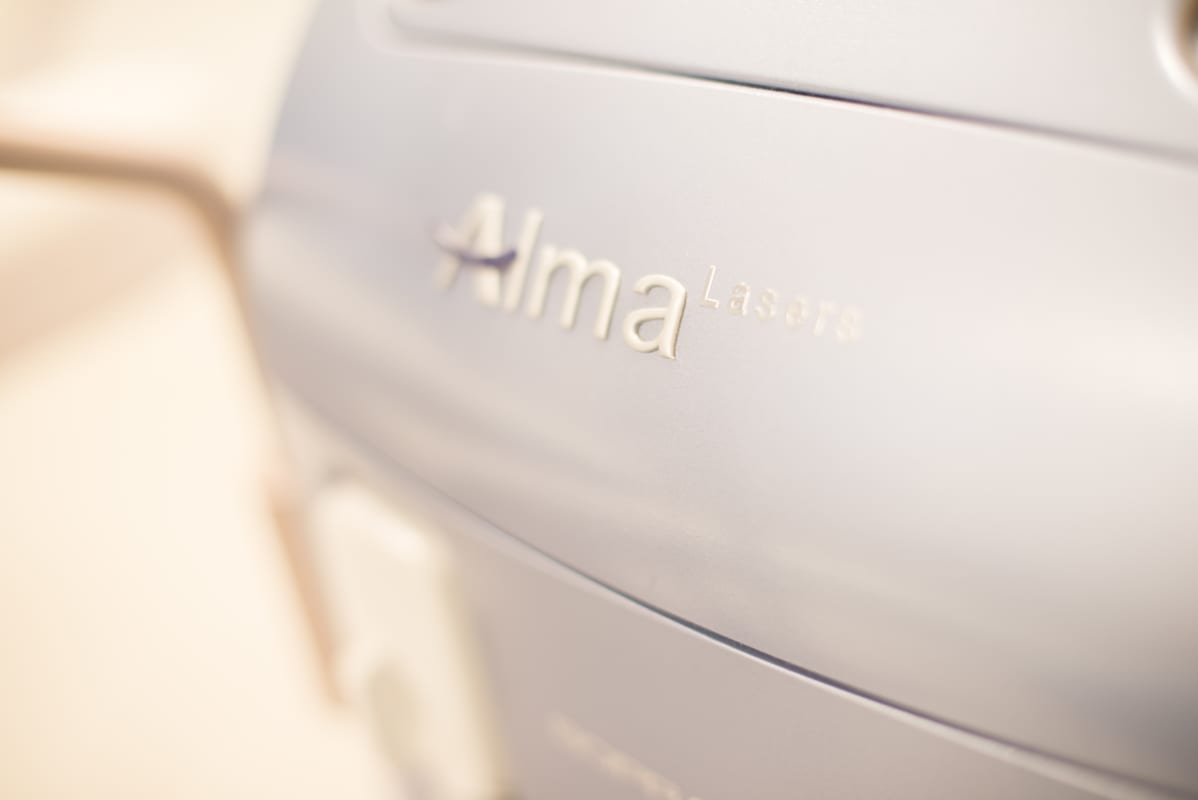


Visit our laser clinics in Bergen and ask our practitioners for advice on unwanted hair growth and laser hair removal.
How does permanent laser hair removal work?
The lasers produce a painless laser beam with a specific wavelength that targets the pigment in the hair. The laser beam is fired several times per second at the skin, and each shot is enough to heat up and destroy the pigment in a large number of hair follicles.
When the hair follicle is heated by the laser beam, its ability to produce hair is destroyed without damaging the surrounding skin. Unlike IPL machines, which often only damage the hair follicles, a laser will destroy the hair follicle permanently, so that the hair follicles will never be able to produce hair again.
An important part of the treatment is the cooling handpiece, which cools the skin and makes it possible to treat even the most sensitive skin. The handpiece both protects and cools the top layer of skin during and after each laser pulse, while emitting the correct laser energy to the hair root.
This video explains how lasers destroy hair follicles, ensuring that your hair is gone for good.
The procedure for removing unwanted hair
Based on your hair problem, we will evaluate which laser and wavelength will be best for you.
- The treatment begins with the hair being cut down, or you shaving the hair yourself to a length of approximately 1 mm.
- A cold gel is applied to the area to be treated and you are given glasses to protect your eyes from the laser light.
- You may feel a slight warmth and stinging sensation with each laser light.
- When the gel is wiped off, some hair will disappear, and the remaining hair will fall out within 2-3 weeks.
It is important that your skin is not tanned, or has been exposed to sunbathing during the 4 weeks before and after treatment.
The combination of contact cooling and other important parameters makes it possible to perform safe and effective treatment for all skin types. Lasers remove colored hair best; white, gray, and red hair cannot be treated.
Results of laser hair removal
How the treated area will look immediately after treatment varies from person to person, depending on the extent of hair growth and skin type. You may experience minor redness or swelling in the treated area.
These are positive clinical results that show that the hair follicle has responded positively to the treatment. Side effects are rare, and if they do occur, they are minor and usually temporary.
Most people resume normal activities immediately after treatment. It is important to understand that it is the hairs that are in the active growth phase that respond best to the laser; hairs have three growth phases. Since not all hairs are in this phase at the same time, several treatments are necessary to achieve the best results. Usually between 5-8 treatments. However, even after the first treatment, you will notice less hair growth, thinner hair, and slower growth.
We take this into account when evaluating your hair problem. For example, men who struggle with ingrown hairs after shaving (pseudofolliculitis barbae) and do not want to remove all their hair will only need a few treatments. Contact us to find out about your treatment, any side effects, and what results you can expect.
Things to know before treatment
- We recommend avoiding sun exposure, solariums, and self-tanning creams for the last 4 weeks before treatment. Tanned skin reduces the effect of treatment and increases the risk of hypopigmentation (temporary loss of pigment).
- Waxing, plucking, or threading should be discontinued during the last 4 weeks before treatment, as the laser only works on hair follicles with hair.
- Skin creams containing fruit acids, vitamin A acid, etc. should not be used in the days leading up to treatment.
- It may be advantageous to shave the hair before treatment. Alternatively, trim it short with scissors.
- If you are using medication that makes your skin sensitive to light, this may increase the risk of burns and is not recommended.
- We do not treat pregnant women or women who are breastfeeding. This is for hormonal reasons; the laser itself is in no way harmful to pregnant women.
Typical treatment areas
Hair removal can be performed on several areas of the body. These are the most common treatment areas:
Back - Stomach - Chest - Legs - Thighs - Arms - Armpits - Bikini area - Face - Upper lip - Chin
We use effective diode lasers, not IPL
IPL stands for Intense Pulsed Light and therefore has nothing to do with lasers.
The principles of the treatment method are quite similar for the customer, but instead of lasers tuned to different wavelengths, IPL uses one strong light with different filters to try to achieve the same good results as real lasers.
Unfortunately, the results and effects cannot be compared. Customers often need many more IPL treatments to achieve the same effect as they would with real laser.
The advantage of IPL is that these machines often cost a tenth of what a laser such as a diode laser costs, and that the machine can be used for several different types of treatment.
Permanent hair removal is offered at the clinic in Bergen and at Knarvik Senter.
FAQ - Frequently asked questions
-
1. Do you offer student discounts on hair removal?
Yes, anyone who shows a valid student ID will receive a 20% discount on hair removal.
-
2. Do you offer package discounts?
Yes, we offer a 25% discount for those who purchase a package of four treatments.
Students also receive a 20% discount on individual treatments and packages.
From the fifth treatment onwards, everyone will receive a 30% discount on the unit price. We call this a maintenance discount.
-
3. What lasers do we use for hair removal?
- Soprano Tianium: combination of 3 wavelengths Diode, Alexandrite, Nd.Yag
- Diode laser 810 nm - Lightsheer ET
- Diode laser 810 nm - Soprano Ice
- Alexandrite 755nm - Soprano Ice
- Diode laser 810 nm - Soprano xli
- Alexandrite 755 - Soprano xli
-
4. Is the treatment painful?
Due to the contact cooling built into the lasers, the treatment will be virtually painless. You will feel a little warmth and a "prickling" sensation on your skin.
-
5. How many laser treatments are necessary?
This varies from person to person. It depends on genetics, hair type such as thickness and color, hormonal imbalance, and the area to be treated.
Most people experience rapid hair reduction after just one treatment, but to treat all growth phases, most people can expect to need at least 4-6 treatments. Those with hormonal imbalances, such as PCOS or hirsutism, should expect 6-8 treatments or more. Since hair growth will change over the course of a lifetime, most people should also expect maintenance treatments in the long term. -
6. Are there any risks or side effects?
Complications and side effects are extremely rare. In recent years, lasers have become so safe that we can treat all skin types, which was not possible with previous generations of lasers. However, it is important that the precautions we set are followed in order to achieve the best results and minimize the risk of side effects. This is especially important with regard to sun exposure and medications that make you sensitive to the sun.
-
7. Where on the body can this treatment be performed?
Typical treatment areas
- Back
- Stomach
- Breast
- Adds
- Thigh
- Arms
- Armpits
- Bikini area
- Face
- Upper lip
- Hook
